SHANGHAI Dramaturgical Guide
Here you will definitions and context for Linda Alper's play, Shanghai. For added accessibility, a Google Doc version of this site can be found and downloaded here. For inquiries/comments, feel free to contact the dramaturg.
Setting/Time
Shanghai, China
1930s-1940s, 1968
Characters
HELENE BRODER - Eva’s Mother
LEO BRODER - Eva’s Father
EVA - European Jewish refugee, plays from a young teen to a middle aged woman. As a teen, she is quick, physically strong, sexual, intelligent and appealing, but also naive, self-occupied and often angsty. As an adult, she is our guide: grounded and determined, yet still moved by the story she is relating. No accent is needed, but rather a speech sound that doesn’t ground us in any specific modern location or culture.
BENJAMIN WUNDEMANN - Late teens/early twenties European Jewish refugee. Overcompensates for fear and insecurity with bravura, yet is genuinely scrappy and resourceful. No specific accent.
IZZY - Late teens. European Jewish refugee. Self-important, entitled Yeshiva student. He speaks English with a strong “Jewish” accent.
SONG MEI FAN - Late teens/twentyish. Chinese. She’s lived through a very violent time and is quite mature, highly intelligent, proud. Speaks in strongly accented English and some Mandarin. (Actors with familiarity of Mandarin are encouraged to audition).
MAYA - Eva’s thirteen year old Japanese-American daughter.
SONG LI - Mei’s father. Chinese. 30’s to 40ish. Formally educated and sophisticated, with a wry sense of humor. Speaks excellent English, perhaps with a British accent.
XU ZENG LIN - Twenties. Chinese, Buddhist. Ultra-sophisticated, confident, elegant. English inflected speech.
WANG WANLI - Twenties to thirties. Chinese. A leading member of the Chinese Underground Resistance. Brave. Street smart. Impatient. Pragmatic. Speaks in English with Chinese accent and a few words of Shanghainese (Actor does not need to be a proficient Chinese speaker.)
PROFESSOR ZHAO - Forties, Chinese professor. Pontifical and proud. Speaks in English with regional Chinese or American influenced Chinese accent.
ZHONG JIANG HU - Late twenties or older. Chinese. The owner of an opium den. He’s a little crude, showy, gruff. Speaks in English with a Shanghai or even cockney influenced Chinese accent.
MAXWELL ROSOVSKY - Late teens/early twenties, Russian Jewish Refugee. The coach for the refugee Boxing Club. Sexy, physical, not terribly verbose. Speaks English with a Russian accent.
RABBI - Jewish Rabbi. Serious, emphatic, rigorous.
DOCTOR - A European refugee Doctor at Immigrant's Hospital. Sympathetic, Weary, Busy.
JEWISH JOINT COMMITTEE MEMBER - Any age, early Jewish refugee. Straightforward, no-nonsense, stern
VOICES - Various off screen voices with a wide range of accents, tones and inflections.
Note: BENJAMIN WUNDEMANN doubles with IZZY. SONG MEI FAN doubles with MAYA. SONG LI doubles with XU ZENG LIN and VOICES. WANG WANLI doubles with PROFESSOR ZHAO, ZHONG JIANG HU, and VOICES. MAXWELL ROSOVSKY doubles with RABBI, DOCTOR, and JEWISH JOINT COMMITEE MEMBER.Pronunciation guide audios will be added soon!

Linda Alper has co-written adaptations and translations of Great Expectations, The Three Musketeers, William Saroyan’s Tracy’s Tiger, Eduardo De Filippo’s Saturday, Sunday, Monday and Napoli Milionaria!, all produced at The Oregon Shakespeare Festival, with additional productions at A.C.T. (San Francisco,) The Denver Center, The Acting Company, Virginia Rep, plus Santa Cruz, Colorado, Stamford (UK) and many other Shakespeare Festivals, smaller theatres and universities. A Fulbright Senior Scholar in Taiwan, Ms. Alper wrote Talk/No Talk, a play about cultural misunderstanding, which also earned a Visiting Science and Artist Grant. Ms. Alper's project was awarded a $350,000 U.S. Cultural Affairs Grant, for which she devised a theatre piece about terrorism and public space with Islamabad’s Theatre Wallay. She brought fourteen Pakistani artists to perform the piece at OSF and Artists Rep, serving as co-producer for their American tour. A leading actress at OSF for 24 seasons, Ms. Alper performed in over 50 plays there. She has also performed many leading roles at Artists’ Rep, where she is a Resident Artist. Roles include Nora in A Doll’s House Part 2, Ranevskaya in The Cherry Orchard, Jeanette in The Quality of Life, Esther in The Price, Dorine in Tartuffe, Lady Bracknell in The Importance of Being Earnest and Lynn Fontanne in Ten Chimneys. Shanghai was commissioned by Artists Rep, as part of their Creative Heights Grant and Table/Room/Stage. It will be produced by Artists Rep in 2021.
Timeline
Elucidation
Original elucidation writers: Alexandra Singleton, Mateusz Kranz, Megan Brown, LaJae Johnson, John Loren, Anabell Cho, Emily "Mike" Coin, Yizhou "Frances" Sun, Lana Spring, Janine Leano, and Violet HansenEdited and expanded by: Janine Leano and Cecilia Zhang (in consultation with Linda Alper and Martin Wong)
Definitions/Context
bravura (page 2) - leaning toward “bravado”
Shanghainese (3) - also known as the Shanghai dialect, Hu language or Hu dialect, is a variety of Wu Chinese spoken in the central districts of the City of Shanghai and its surrounding areas. It is classified as part of the Sino-Tibetan language family.
"1936 was a Rat Year." (6) - referring to the Chinese Zodiac, also known as Sheng Xiao or Shu Xiang. In the Chinese lunar calendar, each year is assigned a zodiac animal in a recurring 12-year cycle (in order: Rat, Ox, Tiger, Rabbit, Dragon, Snake, Horse, Sheep, Monkey, Rooster, Dog and Pig). Originated from ancient zoolatry and boasting a history of more than 2,000 years, it plays an essential role in Chinese culture. The 12 Chinese zodiac animals in a cycle are not only used to represent years in China, but also believed to influence people’s personalities, career, compatibility, marriage, and fortune.A full chart can be found here.
Tarzan (7) - also known as John Clayton II or Viscount Greystroke, Tarzan is a fictional character from Edgar Rice Burroughs’s novels who was brought up in the African jungle by apes and later came to English society. Johnny Weissmuller portrayed the character in a series of films by Metro-Goldwyn-Mayer during the 1930s and 1940s. Notably, the 1943 film Tarzan Triumphs features Tarzan fighting against the Nazis.
"Tarzan the Fearless" (40) - a 12 chapter American Pre-Code film serial starring Buster Crabbe in his only appearance as Tarzan released on August 11, 1933.
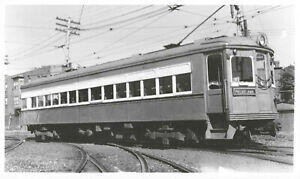
streetcar (8) - a vehicle on rails used primarily for transporting passengers and typically operating on city streets
"Flames and crashes." (9) - see Jewish Pogrom"There are no visas for America! Not to Canada or England or France." (10) - in order to leave, Jews had to provide proof of emigration, usually a visa from a foreign nation, or a valid boat ticket. This was difficult, however, because at the 1938 Évian Conference, 31 countries (out of a total of 32, which included Canada, Australia, and New Zealand) refused to accept Jewish immigrants. The only country willing to accept Jews was the Dominican Republic, which offered to accept up to 100,000 refugees.Anti-Semitic thinking and isolationist justifications in part inspired this. Government officials from the State Department to the FBI to President Franklin Roosevelt himself argued that refugees posed a serious threat to national security. On June 1939, the German ocean liner St. Louis and its 937 passengers, almost all Jewish, were turned away from the port of Miami, forcing the ship to return to Europe; more than a quarter died in the Holocaust.
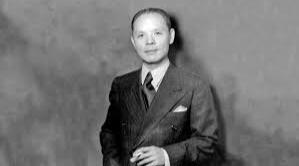
Ho Feng-Shan was a Chinese diplomat who issued tens of thousands of Visas to fleeing Jews after 1938, disobeying his superiors, and was largely responsible for the resettlement of many Jews in Shanghai, part of which during this time was still under the control of the Republic of China.
Related reading: The U.S. Government Turned Away Thousands of Jewish Refugees, Fearing That They Were Nazi Spies by Daniel A. Gross (November 18, 2015)
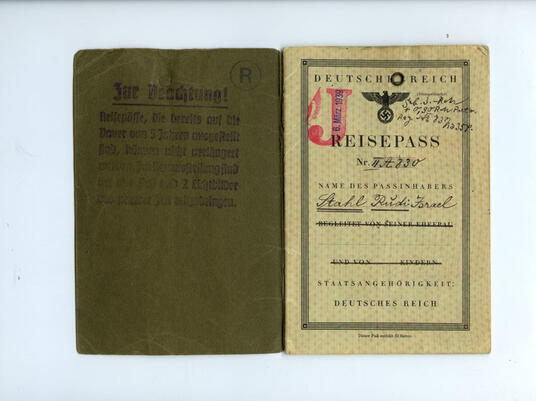
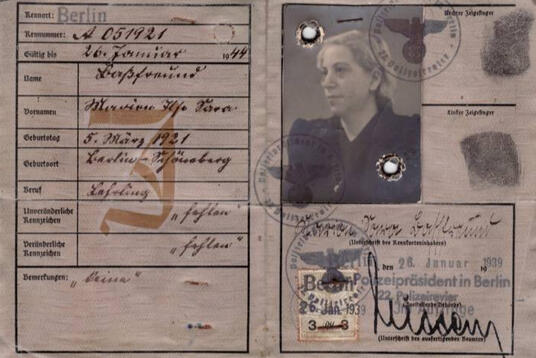
J stamp (12) - Jews were stamped with a J, sometimes on themselves, sometimes on their passports during travel. This stamp was used to discriminate against Jews trying to leave the country, employing humiliating and violating methods against them such as strip/cavity-searching.